内容简介
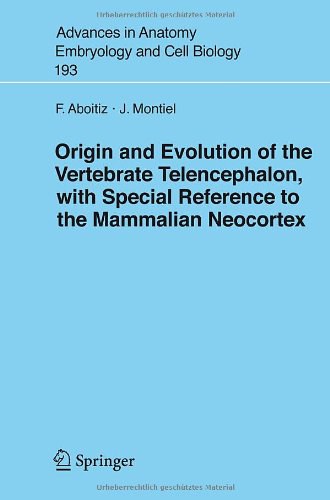
There is little doubt that the vertebrate brain is the most complex structure we know. As with any complex structure, there is the immediate question about its origins. How could such a complex design develop from the simplest multicellular animals? This problem has pervaded the study of evolutionary biology since its beginnings. Although Darwin (1859, 1871) proposed an impecable mechanism (natural selection) for the gradual transformation of species including human origins, even he sometimes expressed certain doubts about the origin of highly complex structures. This issue has been highly debated both within science and outside it. The authors follow an approach that has been termed "developmental evolutionary genetics," which seeks to establish a correspondence between embryological processes and the phylogenetic history of an organism. Modern understanding of these hypotheses acknowledges that in fact, early embryos are readily distinguishable among them, and that human embryos are human embryos during all development; they do not pass from a jellyfish stage to a fish stage and so on (Garstang 1922; Gould 1977; Richardson et al. 1997). However, it is also recognized that embryos pass through successive stages in which they acquire the characters proper to each of the nested phylogenetic categories to which they belong. Thus, there is a general concordance between embryonic stages and the phylogenetic history.
作者简介
Montiel is a municipality of Spain located in the province of Ciudad Real, Castilla–La Mancha. The municipality spans across a total area of 271.22 km2 and, as of 1 January 2020, it has a registered population of 1,294. == History == On 5 March 1227, Ferdinand III donated the Estrella Castle to Pedro González, Grand Master of the Order of Santiago, so Montiel eventually became the head of the Campo de Montiel lands. In 1243, Montiel was granted a fuero (a copy of Cuenca's) and a number of privil
点击查看全部下载链接(含网盘地址及提取码)