内容简介
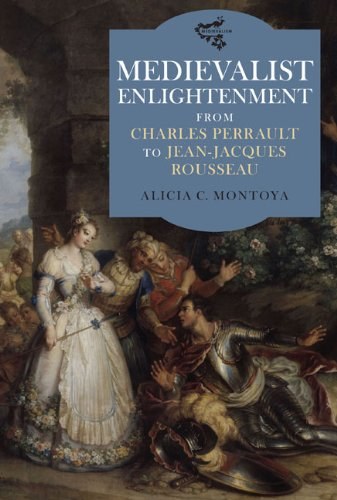
Literary medievalism played a vital role in the construction of the French Enlightenment. Starting with the Quarrel of the Ancients and Moderns, it influenced movements leading to the Romantic rediscovery of the Middle Ages, and helped to shape new literary genres, from the epistolary novel to the fairy tale and opera. Indeed, the dominant mode of the early Enlightenment, galanterie, was of medievalist inspiration. Moreover, the academic study of medieval texts underlay modern ideals of scholarship, institutionalized at the royal academies. The Middle Ages polemically functioned as an alternative site, allowing authors to rethink their age's political and social ideologies. At the centre of these debates was the notion of historical progress. Was progress possible, as the philosophes held, or was human history a process of degeneration, with the Middle Ages as a lost Golden Age? From the re-evaluation of the medieval thus emerged not only the seeds of a new poetics, but also the central questions that preoccupied Enlightenment thinkers from Montesquieu to Rousseau. This book shows how, in order to understand the aesthetic and intellectual transformations that marked modernity, it is essential to examine how this period conceived of the past, and particularly those "Dark Ages" that served as the defining foil for the modern Age of Light. Alicia C. Montoya is an Assistant Professor at the Department of Literary and Cultural Studies at the Radboud University Nijmegen.
作者简介
Montoya is a Basque and Spanish surname. It originally comes from a hamlet near Berantevilla in Álava, in the Basque region of northern Spain. During the Reconquista, it extended southwards throughout Castille and Andalusia. The name roughly translates to mean hills and valleys. It has become more frequent among Gitanos than among the general Spanish population. People with the surname Montoya include: Adam Montoya (born 1984), American video game commentator, better known as SeaNanners Al Monto
点击查看全部下载链接(含网盘地址及提取码)