内容简介
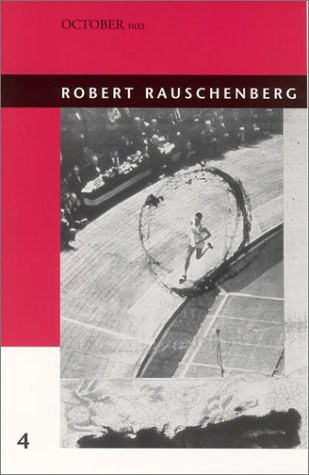
From the moment art historian Leo Steinberg championed his work in opposition to Clement Greenberg?s rigid formalism, Robert Rauschenberg has played a pivotal role in the development and understanding of postmodern art. Challenging nearly all the prevailing assumptions about the visual arts of his time, he pioneered the postwar revival of collage, photography, silkscreen, technology, and performance.This book focuses on Rauschenberg?s work during the critical period of the 1950s and 1960s. It opens with a newly prefaced version of Leo Steinberg?s "Reflections on the State of Criticism," the first published version of his famous 1972 essay, "Other Criteria," which remains the single most important text on Rauschenberg. Rosalind Krauss?s "Rauschenberg and the Materialized Image" builds on Steinberg?s essay, arguing that Rauschenberg?s work represents a decisive shift in contemporary art. Douglas Crimp?s "On the Museum?s Ruins" examines Rauschenberg?s silkscreens in the context of the modern museum. Helen Molesworth?s "Before Bed" uses psychoanalytic and economic structures to examine the artist?s Black Paintings of the early 1950s. A second essay by Krauss, "Perpetual Inventory," revisits both her and Steinberg?s articles of nearly twenty-five years earlier. Finally, Branden Joseph?s "A Duplication Containing Duplications" views Rauschenberg?s silkscreens in relation to the artist?s interests in technology, particularly television.
作者简介
Joseph is a common male name, derived from the Hebrew Yosef (יוֹסֵף). "Joseph" is used, along with "Josef", mostly in English, French and partially German languages. This spelling is also found as a variant in the languages of the modern-day Nordic countries. In Portuguese and Spanish, the name is "José". In Arabic, including in the Quran, the name is spelled يوسف, Yūsuf. In Kurdish (Kurdî), the name is Ûsiv or Yûsiv, Persian, the name is Yousef, and in Turkish it is Yusuf.
点击查看全部下载链接(含网盘地址及提取码)